Guest List, Not Costume: Dressing for a Sri Lankan Wedding Stateside
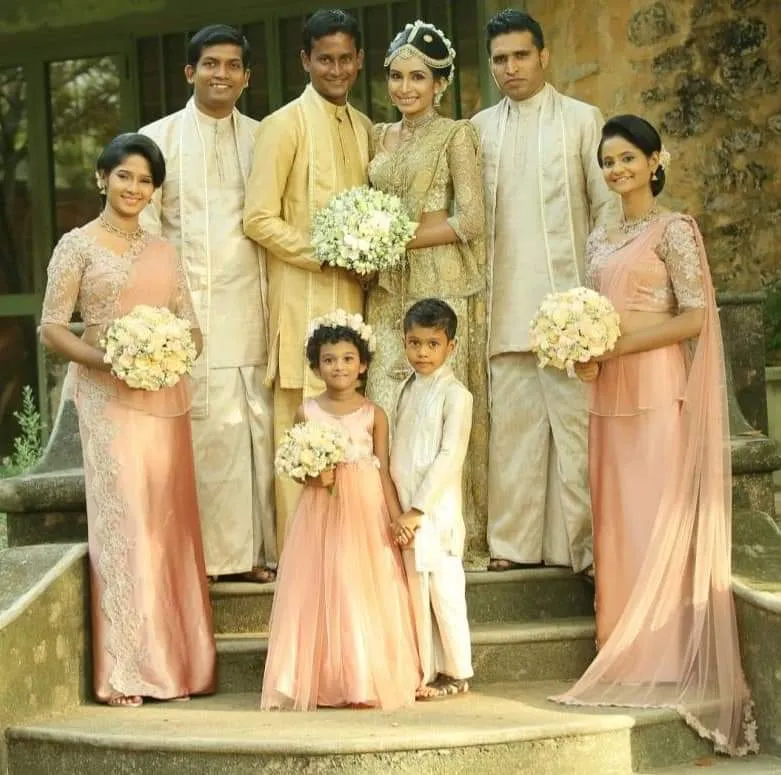
Photo: Rangani Kaushalya Meddepola, CC BY-SA 4.0, via Wikimedia Commons
A Sri Lankan wedding in the United States rarely follows one neat script. You might be invited to a morning poruwa ceremony in a hotel ballroom, a reception with a live band and a packed dance floor, a home blessing, or a temple event the day before. The dress code can be traditional, semi-traditional, or quietly flexible. The goal is not to look Sri Lankan if you are not. The goal is to look like you understood the invitation, respected the family, and dressed for the actual room you are walking into.
Read the Invitation Before You Read the Room
The first rule is boring and essential: ask. If the invitation does not specify a dress code, check with the couple or a close family member. Ask whether the ceremony is at a temple, a home, a hotel, or an outdoor venue. Ask whether guests are wearing traditional dress, formal Western attire, or a mix. Ask about color restrictions if you are unsure. A quick text to the right cousin will save you an hour of anxious internet searching.
For American guests, the safest starting point is semi-formal or formal with a cultural nod—not full costume. A tailored kurta, a elegant sari, a well-cut suit, or a dress in a rich color can all work. For Sri Lankan and diaspora guests, the calculus is different: you may already own the right pieces, but you still need to match the event’s tone. A heavy silk sari at a backyard ceremony can feel as off as jeans at a hotel reception.
Sari, Osari, and Lehenga: What Each One Says
A sari is the most flexible choice for women. It can be silk, cotton, handloom, or a modern pre-draped version. It reads formal without being locked to one region or religion. If you are new to draping, choose a pre-stitched sari or ask a friend to help you practice before the day. A simple cotton sari with a contrasting blouse can be perfect for a daytime ceremony; a richer silk or embroidered sari suits an evening reception.
An osari—often associated with Kandyan Sri Lankan dress—typically involves a draped cloth and jacket, sometimes with a distinctive fan-like back drape. It is beautiful, but it is also more specific. Wear it if you have a connection to it, if the family has suggested traditional Kandyan dress, or if you have been invited to do so. It is not the default “Sri Lankan wedding outfit,” and that is okay.
A lehenga is more associated with Indian weddings, but plenty of Sri Lankan diaspora guests wear them, especially in mixed-family or South Asian American circles. If you already own one and the couple’s crowd is comfortable with that, go ahead. If you are a non-Sri Lankan guest choosing between a lehenga and a sari, the sari often reads as the more neutral, locally grounded choice—but only if you are comfortable wearing it.
Color and Jewelry Etiquette
Sri Lankan weddings are often colorful, and guests are usually encouraged to dress with some richness. That said, avoid all-white, especially in fabrics that could be mistaken for bridal wear. Many Sri Lankan brides wear white or cream, whether in a sari, osari, or Western dress. All-black is also worth avoiding for daytime ceremonies, where it can read as overly somber. Jewel tones, jewel-adjacent brights, pastels, and rich neutrals are safer.
Jewelry is where cultural fluency matters. Gold is traditional and widely worn, but you do not need to borrow a family treasury. A pair of gold-toned earrings, a simple necklace, or a stack of bangles is enough. If you are a guest who is not Sri Lankan, avoid temple jewelry or bridal-style headpieces unless the family has explicitly encouraged it. The same goes for heavy henna, if it is not part of your own tradition. Respect is not about adding more cultural markers. It is about not treating someone else’s wedding as a dress-up box.
Menswear Without the Afterthought
Men often get less guidance, which is a mistake. A well-tailored suit in a breathable fabric—linen blend, lightweight wool, cotton—is always safe for a formal reception. A kurta with tailored trousers can work for a semi-traditional event. Sri Lankan national dress, often a white shirt and sarong-style lower garment, can be appropriate if you are Sri Lankan or if the family has signaled that traditional dress is welcome. Do not guess. Ask.
Shoes matter more than you think. If the ceremony is in a temple or a home, you may need to remove them. Choose footwear you can slip off without a struggle, and carry a pair of socks if the floor will be warm or rough. For outdoor venues, skip the fragile suede. For ballroom receptions, a polished loafer or dress shoe is fine.
The Details That Make It Feel Right
Draping help is not a failure. Saris and osari need pins, pleats, and practice. If you are wearing one, do a trial run a few days before. Pack safety pins, a small sewing kit, and a spare safety pin in your bag. Wear a petticoat or the right underlayer. Practice walking, sitting, and climbing stairs. A beautiful sari that you cannot manage is not a comfortable outfit.
Fabric should match the climate and the venue. US weddings may be air-conditioned, but the parking lot, the photos, and the dance floor are not. Cotton, linen, lightweight silk, and handloom are your friends. Bring a shawl or light jacket for evening air conditioning. If the event spans a ceremony and a reception, consider a change of shoes or a simpler second outfit.
If You Are Not Sri Lankan, Borrow With Care
It is wonderful to wear a sari or kurta to a Sri Lankan wedding when it is done with respect. It is less wonderful to wear a costume. The difference is fit, context, and humility. Choose a real garment, have it tailored or draped properly, and avoid mixing sacred or bridal symbols into a party look. If you are unsure, ask the couple. Most families would rather answer a question than watch a guest spend the night adjusting a borrowed outfit.
The best-dressed guest at a Sri Lankan wedding in America is not the one with the most elaborate outfit. It is the one who looks comfortable, appropriate, and genuinely happy to be there. That is the whole dress code.