Five Colombo Labels Quietly Redefining Casual Cool
Photo: Fred Lewis Shankweiler Sr., Public domain, via Wikimedia Commons
Colombo has never lacked tailors. What it lacked, until fairly recently, was a streetwear scene that felt like it belonged to the city instead of borrowing from somewhere else. That has changed quickly. Spend a Saturday in Kollupitiya and you'll pass design students in boxy, sun-faded tees, twenty-somethings in cropped work jackets cut from handloom offcuts, and diaspora kids home for the holidays wearing hoodies printed with bus-livery typography they can't fully translate for their cousins.
The labels behind those clothes aren't chasing global sneaker culture. They're doing something more interesting: taking the visual vocabulary of Sri Lanka — paddy-field geometry, temple fresco color, the hand-painted lettering above a Pettah shopfront — and running it through shapes that scan as completely ordinary to an American eye. Below are five studios worth watching as the calendar turns to 2027.
The Scene, Briefly
Most of these operations are small. Two to six people, a converted house or a room above a shop, a dye vat in the back and a ring light in the front. Nobody is producing a traditional seasonal calendar. Instead, drops are announced on Instagram Stories, run somewhere between 50 and 200 units, and sell out in days — sometimes hours. There is no wholesale program to speak of, which is exactly why US shoppers tend to discover them through a friend rather than a department store.
The Labels
Wela Workshop
Named for the paddy field, this studio built its reputation on heavyweight jersey. The signature "Kuru" tee weighs in around 240 grams, cut wide through the chest and short in the body, with a single-color line drawing of field ridges across the chest. Drops are usually 80 pieces. Expect $45 to $70, and expect to wait — restocks are announced, not scheduled.
Pettah Print Club
Graphic-led and unapologetically local. The team screen-prints two-color designs in a narrow shop above a hardware stall, pulling type directly from hand-lettered signage around the neighborhood. The registration is deliberately imperfect, so no two shirts line up exactly. If you like your graphics with a little grit, this is the one.
Monsoon Athletics
Sportswear-adjacent without tipping into gym-wear. Nylon track pants, oversized hoodies, and a color story lifted from a Colombo downpour — slate, wet concrete, and a single flash of bus red. The cuts run long in the body and wide at the hem, which makes them unusually forgiving across body types.
Nool & Co.
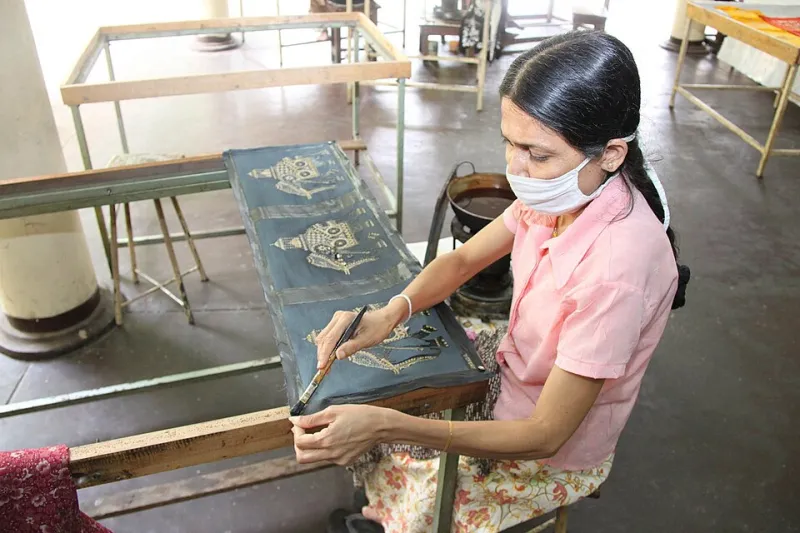
Nool means thread. This label works in hand-dyed jersey and cotton poplin, using indigo and madder root for depth rather than uniformity. The irregularity is the point — no two panels dye the same. It's a good entry point for anyone who finds graphics too loud but still wants something with a story.
Galle Face Garage
Workwear, essentially. Ripstop overshirts, canvas totes, and utility vests with embroidery you only notice up close. Dyes are salt-faded and sun-bleached, drawing on fishermen's kit and mechanic uniforms. Cut boxy and built to be beaten up.
Why American Shoppers Are Catching On
Three things are driving it. First, Instagram and short-form video — a fifteen-second clip of a dye vat does more than any lookbook. Second, diaspora word of mouth; group chats and WhatsApp threads move product faster than paid ads ever could. Third, scarcity. When a drop is 80 units, the person who got one posts about it, and the algorithm does the rest.
A few practical notes: most of these labels list measurements in inches, ship internationally within two to three weeks, and don't offer easy returns. Order one piece before committing to three. Duties are usually collected at delivery unless the brand has switched to prepaid shipping.
Styling Notes for American Closets
This is the part where people get nervous, and rightly so. A beautiful shirt from Colombo can look like a souvenir if you stack it with everything else that reads "travel." A few rules of thumb:
- Let one piece carry the story. If the top has a motif, the rest of the outfit stays quiet — plain denim, a chino, a neutral sneaker.
- Keep the silhouette familiar. Boxy tee with straight-leg denim is a shape you already understand. The novelty lives in the fabric and print, not in an unfamiliar cut.
- Skip the full look. No head-to-toe styling in one regional reference. A hoodie and a cap from the same label is plenty.
- Anchor with a neutral. Off-white, olive, charcoal, indigo. Warm metals over cool ones.
- Watch the proportions. If the top is wide, the bottom should have structure. If the top is cropped, the bottom can carry volume.
- Footwear does the grounding. Canvas sneakers, a plain leather boot, or a low-profile runner all work. Leave the statement shoe at home.
What's Ahead for 2027
More of these studios are moving from printing onto blanks toward cut-and-sew done locally, which means better fits and higher prices. Several are experimenting with deadstock and secondhand fabric, partly for cost and partly because the supply of good handloom is finite. And the first US pop-ups are being floated, mostly in cities with established Sri Lankan communities. None of it is guaranteed, but the direction is clear: this is no longer a niche curiosity. It's a scene.
If you buy one thing, buy the tee. Wear it with jeans. Then see how it feels.