The Bobbin Lace of Southern Sri Lanka Is Ready for Your Summer Wardrobe

Photo: Sri Lankan beeralu bobbin lace handmade textile close up, via wallpapers.com
Beeralu does not announce itself with a shout. Up close, it is a small architecture of thread — flowers, diamonds, scallops, and airy repeats — made by hand on a pillow with a set of bobbins. From a distance, it reads as texture. On a summer blouse or a cotton scarf, it reads as something you cannot quite place, which is usually the sign of a craft worth knowing.
The tradition comes from southern Sri Lanka, where coastal towns have kept beeralu lace alive across generations. Its roots are often traced to Portuguese influence on the island in the sixteenth century, but the craft itself became distinctly local: a household skill, a source of income, and a visual language passed down through practice rather than theory. In 2026, that history is meeting a new audience — including American shoppers who are tired of flat, machine-made trim and curious about pieces with a human hand behind them.
A Craft Built on Rhythm
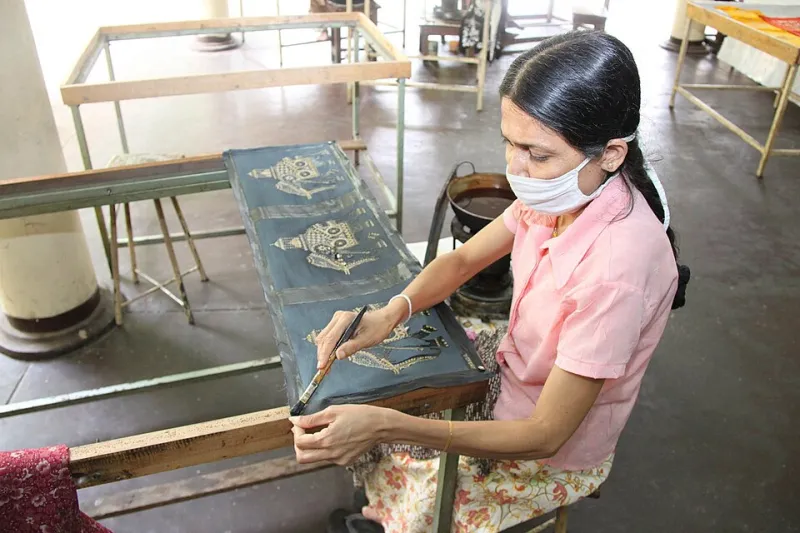
Beeralu is bobbin lace, which means it is made by weaving and crossing threads wound on small bobbins. The work is paced and repetitive, but not mindless. A maker follows a pattern, pins the work to a pillow, and moves the bobbins in sequence. The result is a fabric of tiny decisions: tension, spacing, and pattern memory.
That is part of why beeralu feels different from the lace most Americans encounter in fast-fashion trims. It has slight irregularities. The motifs have weight. It does not look printed or stamped. It looks made.
Why It Fits the 2026 Summer Mood
Warm-weather dressing in the US has been moving toward texture for a while now. Linen is no longer the only answer. People want cotton poplin with a little structure, crochet that does not feel craft-fair, and trims that add interest without adding heat. Beeralu fits that brief neatly. It is open, breathable, and visually light. It also carries a slow-craft story that sits well with shoppers who are trying to buy fewer, better things.
The catch is that beeralu is not a mass material. It takes time. That makes it a natural fit for accents rather than full garments — a collar, a cuff, a hem, a panel, a bag, a belt. In the right hands, that restraint is the point.
How Colombo Designers Are Reworking It
Contemporary Sri Lankan labels are treating beeralu less like a heritage display and more like a design element. You will see it used as a trim on cotton shirts, as an insertion panel on camisoles, as a narrow edging on scarves, and as a decorative layer on bags and accessories. Some designers keep the palette natural — ivory, ecru, black — and let the pattern do the talking. Others use it as a contrast against crisp poplin or soft jersey.
The strongest versions tend to avoid overstatement. A beeralu collar on an otherwise plain shirt feels modern. A full lace top can be beautiful, but it asks more of the wearer. For most people building a real wardrobe, the accent approach is easier to live with.
Styling It for US Summer
The easiest way to wear beeralu is to treat it as texture, not as a theme. Pair a beeralu-trimmed blouse with straight-leg jeans and leather sandals. Layer a beeralu scarf over a plain tank and loose trousers. Use a beeralu bag with a white tee and tailored shorts. Keep the rest of the outfit quiet so the lace can be the detail people notice second, not the costume they notice first.
If you are wearing a beeralu top, balance it with something grounded: denim, cotton twill, or clean linen. Avoid piling on other lacy pieces. One lace element is usually enough. For evening, a black beeralu-trimmed camisole with wide-leg pants feels more interesting than another predictable slip dress.
Buying and Keeping It
Ask whether the lace is handmade. “Beeralu-inspired” can mean machine lace, which is fine if that is what you want, but it is not the same craft. Check the hand-feel and the pattern repeat; handmade lace has small variations. If you are buying from a Sri Lankan designer, ask how the lace is sourced and whether the makers are credited. Good labels are increasingly open about this.
Care is simple but not careless. Hand wash gently in cool water with mild soap, press flat or between towels, and store folded rather than hung so the lace does not stretch. Treat it like a textile with memory, because that is what it is.
The appeal of beeralu is not that it looks old. It is that it looks made by someone. In a summer wardrobe full of easy cottons and plain tees, that small human irregularity is exactly what makes a piece feel worth keeping.